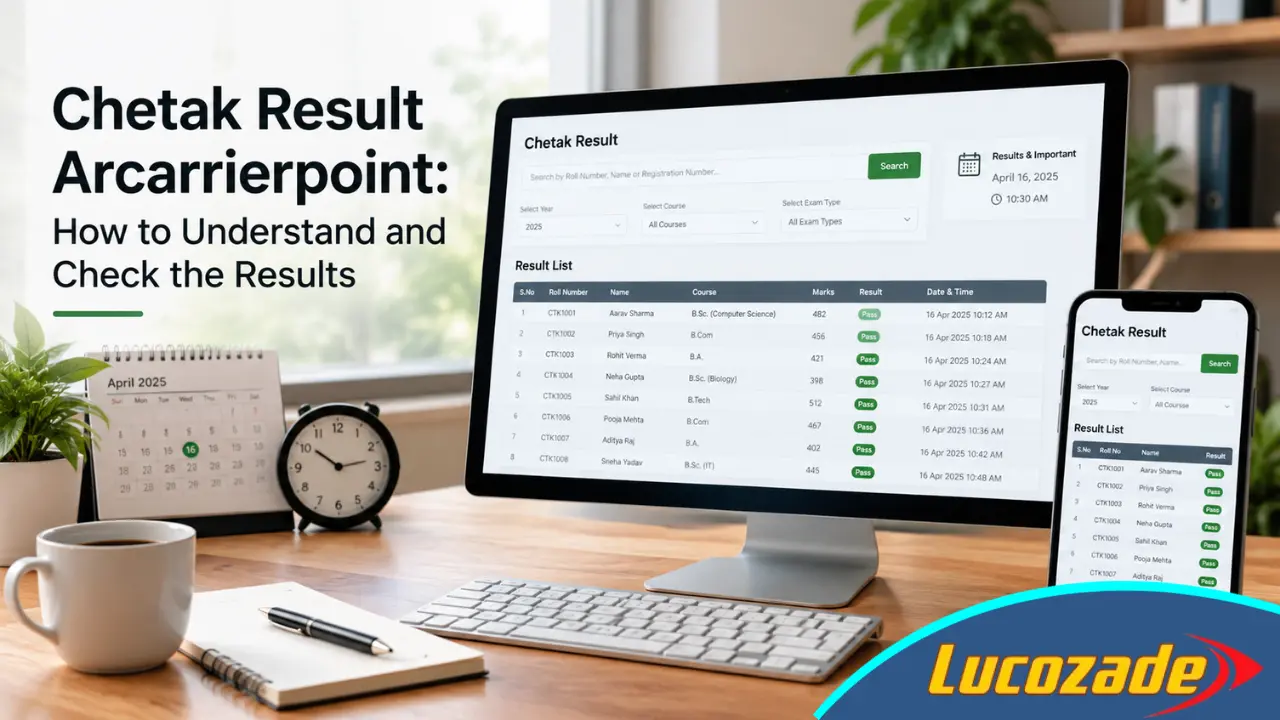
Chetak Result Arcarrierpoint is a search term associated with online pages that display Chetak numerical results. Current search results show Chetak entries presented in time-based tables, often alongside categories such as Sangam, Super, and Deluxe. Because the same phrase is described differently across websites, understanding the actual result format is important before treating any page as an official or academic result source.
One particularly important point is that Chetak Result Arcarrierpoint should not automatically be interpreted as a school, university, recruitment, or government examination result. The Chetak pages found in current search results generally use numerical tables rather than conventional academic scorecards containing subjects, marks, grades, or candidate details.
What Chetak Result Arcarrierpoint Refers To
The phrase combines “Chetak Result” with “Arcarrierpoint,” which is why it can create confusion for people encountering it for the first time. Search results currently connect the phrase with pages displaying Chetak numerical result information, while websites using similar ARCarrierPoint branding may also publish educational and examination-related material.
The Chetak result format is generally based around scheduled times and numerical entries. A typical table may contain a time column followed by several categories, with the Chetak entry appearing under its own heading.
This means the most useful way to understand a result is to look at the complete row rather than focusing on an isolated number. The date, time, category, and source all provide context for the displayed information.
Understanding the Chetak Result Table
A Chetak result table is relatively simple once its structure is understood. Current pages associated with the search term show tables containing scheduled times and separate numerical categories. Some examples include Chetak, Sangam, Super, and Deluxe.
For example, a simplified table may look like this:
| Time | Sangam | Chetak | Super | Deluxe |
| 09:00 AM | 34 | 51 | 47 | 35 |
| 09:15 AM | 24 | 64 | 10 | 29 |
| 09:30 AM | 74 | 60 | 53 | 25 |
The numbers above illustrate the format rather than representing a current result.
The key detail is the column heading. If someone is looking specifically for the Chetak entry, the number under the Chetak column is the relevant value for that row. A number appearing beside it under another category should not be treated as the Chetak result.
This is why checking the full table is more reliable than relying on a search-engine preview, a social-media post, or an isolated number copied elsewhere.
How to Check Chetak Result Arcarrierpoint
Checking a published result generally involves identifying the correct page and then matching the relevant date and time. The process is straightforward when the page is clearly organized.
A practical checking process is:
- Open the page containing the Chetak result information.
- Confirm that the displayed date is the date you are looking for.
- Locate the table containing the Chetak heading.
- Find the required time or result row.
- Read the number directly under the Chetak column.
- Check whether the entry is marked as current or historical.
- If accuracy is important, compare the information with another reliable source.
The final step matters because websites using similar names may not necessarily represent the same organization, publisher, or source. Current search results show that the ARCarrierPoint name appears across pages with different types of content, making the exact domain and page particularly important.
Why Date and Time Matter
Date and time are two of the most important pieces of information when reading Chetak Result Arcarrierpoint.
A numerical result without a date can easily be misunderstood. A number displayed yesterday may remain visible in an archive or historical table even after a new day’s information has been published.
Time is equally important because some result pages organize multiple entries throughout the day. Current indexed pages show numerous time slots, including entries at short intervals.
For that reason, readers should avoid treating a number as current simply because it appears near the top of a page. The actual date and time should always be checked.
Previous Chetak Results and Historical Records
Previous results are useful for reviewing information from earlier dates. They can help readers understand how a website organizes its historical records and make it easier to locate an older entry.
Historical tables may contain several days of information, so keeping the date attached to each result is essential. Without the date, it becomes difficult to distinguish one entry from another.
Previous results should also remain separate from current results. An old entry is a record of what was previously displayed; it should not automatically be treated as a current result.
Similarly, historical numbers should not be presented as guaranteed indicators of future outcomes. A record of previous results describes the past and does not establish what a later result will be.
Is Chetak Result Arcarrierpoint an Academic Result?
There is considerable confusion online about this point. Some third-party pages describe Chetak Result Arcarrierpoint as an academic examination result, including claims about student marks, roll numbers, grades, and qualification status. However, the Chetak result pages currently visible in search results use a different structure based on time-based numerical tables.
A conventional academic result normally identifies a student or candidate and may contain information such as:
- Candidate or student name
- Roll number
- Examination name
- Subject-wise marks
- Total marks
- Grades or percentage
- Pass or qualification status
The Chetak tables found during research do not follow that conventional marksheet format. Instead, they organize numerical entries by scheduled times and categories.
Therefore, readers should examine the actual page rather than assuming that the phrase refers to an examination authority or educational scorecard.
Why the Keyword Can Be Confusing
The word “Arcarrierpoint” adds another layer of confusion because websites using similar names can cover different subjects.
Some AR Carrier Point-related websites are associated with education, examination information, recruitment updates, study resources, and other informational content. Meanwhile, pages appearing for Chetak Result Arcarrierpoint can show numerical result tables.
This means the name alone is not enough to establish what a particular page does.
When researching the topic, readers should pay attention to the exact web address, page title, content format, publisher information, and date of publication or update. These details can help distinguish one website from another.
How to Read Current and Historical Information Correctly
A useful habit is to separate three types of information: current results, previous results, and commentary.
Current results refer to information presented for the relevant date and scheduled time. Previous results refer to historical entries. Commentary includes explanations, predictions, opinions, or claims made around those numbers.
Keeping these categories separate makes the information easier to understand.
For example, a historical table can tell you what was displayed on a previous date, but it does not by itself establish what a later result will be. Likewise, a third-party article discussing patterns should not be confused with the actual published result.
This distinction is especially important when several websites reproduce similar tables or use similar terminology.
What to Check Before Trusting a Result Page
Not every page that appears for a search query should automatically be treated as an authoritative source. A few basic checks can improve the quality of the information being used.
Look for:
- A clearly displayed date
- A clearly displayed result time
- The correct Chetak column
- A consistent table format
- An identifiable website or publisher
- Clear separation between current and previous entries
- Information that can be cross-checked when necessary
Readers should also be cautious about pages that make unusually strong claims without explaining where their information comes from.
The presence of words such as “live,” “verified,” or “official” does not by itself prove that a page has official authority. Those descriptions should be considered alongside the actual source and supporting information.
Chetak Results and Claims About Future Numbers
Historical Chetak results may attract attention because people naturally look for patterns in numerical information. However, past entries should not be presented as a reliable method for determining future outcomes.
A historical chart can show what happened previously. It cannot independently establish what will happen next.
This distinction is important when reading websites that combine published results with commentary, tips, predictions, or claims about particular numbers. A reader should be able to distinguish the recorded result from an individual’s interpretation of that result.
For factual checking, the result itself should remain the primary point of reference rather than an unsupported prediction.
Staying Safe When Searching Online
Searching for result information does not normally require sharing sensitive personal information. Readers should be careful if a website or individual asks for information that is unrelated to simply viewing publicly available results.
Avoid providing:
- Passwords
- One-time passwords
- Banking credentials
- Card details
- Remote access to a device
- Unnecessary identity documents
It is also sensible to avoid downloading unknown applications or browser extensions simply because a page claims they are necessary to view a result.
A straightforward result page should be understandable without requiring unnecessary access to personal accounts or devices.
What Makes a Result Page Easier to Use?
A useful result page generally benefits from a clear layout. Visitors should be able to identify the date, time, category, and number without having to interpret complicated navigation.
Good organization can include:
- Clearly labelled result columns
- Chronological time entries
- Separate historical records
- Visible update dates
- Mobile-friendly tables
- Straightforward navigation
These features make it easier to locate the required information, particularly for visitors checking a result from a smartphone.
At the same time, presentation should not be confused with authority. A professionally designed page can still contain information that needs to be independently verified.
Why Readers Should Check the Exact Domain
The exact domain is particularly important for searches involving Arcarrierpoint because multiple websites and pages use similar terminology.
Current search results show different domains discussing the same keyword, and their descriptions are not always consistent. Some focus on numerical results, while others describe the term as an educational result.
Therefore, a reader should not assume that a page is official merely because its title contains the expected keyword.
Before relying on information, check the domain name, page content, publication details, and whether the information is supported by a recognizable source.
The Difference Between a Result and a Result Guide
Another useful distinction is between a result page and a guide about the result.
A result page is intended to display the actual numerical information for a particular date or time. A guide, meanwhile, explains the meaning of the search term, describes how tables work, or discusses how readers can find relevant information.
These two types of pages can appear next to each other in search results.
A guide can be useful for understanding terminology, but it should not automatically be treated as the original source of a result. When an exact number matters, readers should look for the page that actually publishes or records that result.
Using Search Results More Carefully
Search engines can provide several interpretations of the same phrase. That is particularly noticeable with Chetak Result Arcarrierpoint because the available pages do not all describe the keyword in exactly the same way.
A sensible approach is to compare the search result title with the content on the page. If the title suggests an academic result but the page contains a numerical table, the table provides important context.
Readers should also consider publication dates. An older article may continue appearing in search results even when a newer page contains more current information.
The goal should be to identify what the page actually provides rather than relying solely on the wording used in its title.
Conclusion
Chetak Result Arcarrierpoint is primarily associated in current search results with online Chetak numerical result information arranged by dates, times, and categories. The available Chetak tables commonly show Chetak alongside other numerical categories, making it important to read the correct column and match it with the appropriate time and date.
The keyword can be confusing because ARCarrierPoint-related websites may also publish educational and examination content, while other pages connected with the search phrase display numerical result tables. For that reason, the exact domain and page format should always be checked before treating information as authoritative.
For anyone researching Chetak Result Arcarrierpoint, the most useful habits are simple: verify the date, check the time, read the correct category, distinguish current information from historical records, and avoid treating unsupported predictions as confirmed results.
Frequently Asked Questions
What is Chetak Result Arcarrierpoint?
It is a search term associated with online Chetak numerical result tables and related result information.
Is Chetak Result Arcarrierpoint an academic examination result?
The Chetak tables currently found online use a numerical, time-based format rather than a conventional academic marksheet format.
How do I read a Chetak result table?
Check the date and time first, then locate the Chetak column and read the number shown on the relevant row.
Why are there different websites for this search term?
Different websites use similar ARCarrierPoint terminology, and they may publish different types of information.
Are previous Chetak results still useful?
They can be useful as historical records, but they should be kept separate from current results.
Can previous results guarantee a future result?
No, historical entries alone do not establish or guarantee what a future result will be.
What should I verify before trusting a result page?
Check the exact domain, date, time, category, source information, and whether the result can be independently cross-checked.
Should I provide passwords or OTPs to check a result?
No, publicly available result information should not require you to share passwords, OTPs, or banking credentials.
Also Read: Adstotally.com