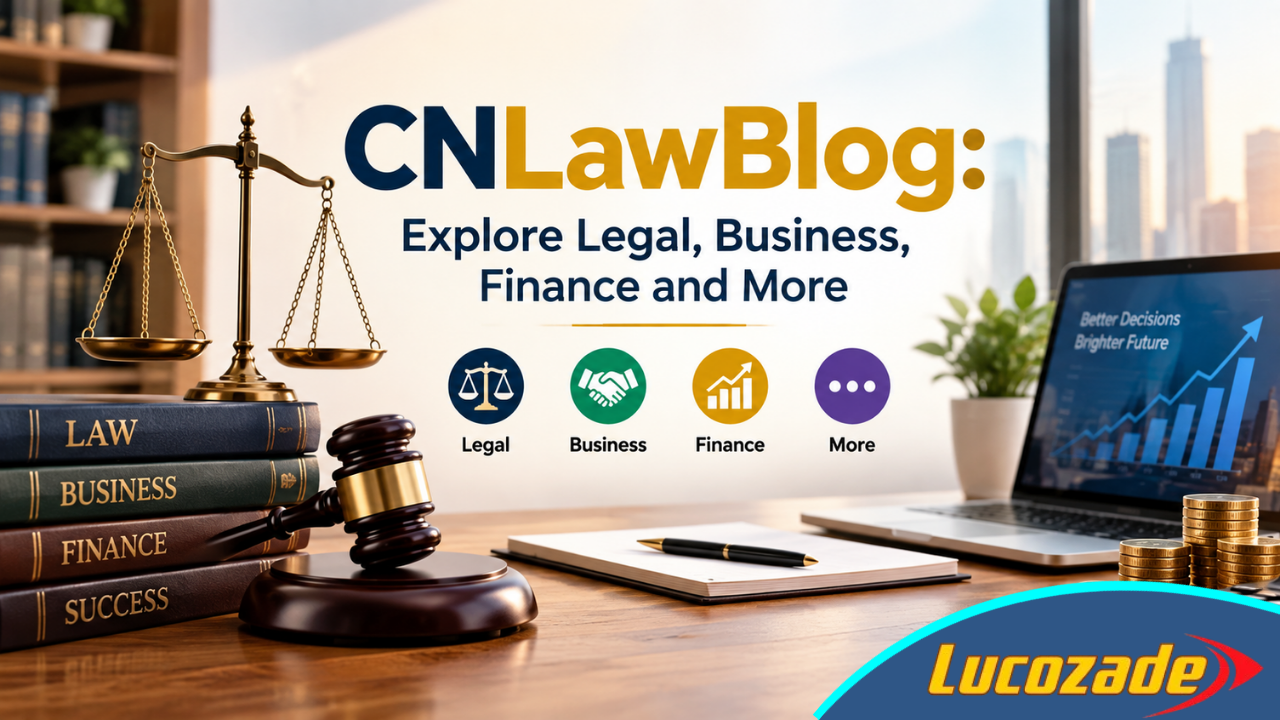
CNLawBlog is an online publishing platform that has attracted attention from readers searching for accessible information about law and a range of other practical subjects. The name naturally suggests a website devoted entirely to legal topics, but the current CNLawBlog.com publication has a much broader editorial scope. Its homepage includes material covering law, finance, business, technology, health, education, lifestyle, and other areas.
For readers discovering the site through search engines, understanding what CNLawBlog actually is can make it easier to navigate its content. It is presented as an independent online publication rather than a court, government legal database, or law firm. That distinction is particularly important when reading material about subjects where current rules, professional qualifications, or authoritative sources matter.
What Is CNLawBlog?
CNLawBlog is a digital publication designed to make information easier to read and understand. Its own description presents the platform as an independent source covering several subject areas rather than limiting itself to one narrow branch of law.
The legal side of the publication includes explanations and discussions intended for readers who want a straightforward introduction to different concepts. At the same time, the wider website contains articles on subjects that have little direct connection with traditional legal publishing.
This broad approach means the site can appeal to readers with different interests. Someone may arrive looking for a legal explanation, while another visitor may find an article about finance, technology, business, education, or everyday life.
The most important point is that the exact website address matters. The name CNLawBlog is also used by other websites, and those publications can have substantially different purposes.
What Topics Does CNLawBlog Cover?
The current CNLawBlog.com website describes its coverage as extending beyond law into several practical categories. Its homepage and recent archive include subjects involving finance, technology, business, health, education, and other areas.
Its broad subject range can be useful for readers who prefer finding different types of informational material in one publication.
Depending on the current publishing schedule, visitors may encounter articles related to:
- Legal concepts and general legal information
- Business and professional topics
- Personal and financial subjects
- Technology and emerging digital developments
- Health and wellness information
- Education and learning
- Lifestyle topics
- Other practical subjects
The mixture also explains why judging the entire website based on a single article can be misleading. Different topics require different standards of evidence and expertise.
A general technology explainer, for example, can often be checked against technical documentation. A legal article may require readers to consult legislation, court decisions, regulations, or qualified legal professionals for information specific to their circumstances.
Why the Name Can Be Confusing
One of the most important things to understand about CNLawBlog is that similar names appear across the web.
The phrase can easily be confused with China Law Blog, a separate publication associated with Harris Sliwoski that focuses on Chinese law and international business matters. That publication is not the same thing as CNLawBlog.com.
There are also other domains using variations of the CNLawBlog name. For example, one separate website presents itself as a resource focused specifically on Chinese law, including subjects such as data privacy, cybersecurity, corporate law, and cross-border business matters.
This makes domain verification particularly useful when searching online.
Before relying on an article, readers should check:
- The exact domain shown in the browser
- The publication or website identity
- The author or byline
- The subject being discussed
- Whether the article provides supporting sources
- Whether the information is current
The name alone does not establish that two similarly branded websites belong to the same organization.
How CNLawBlog Organizes Its Content
A useful feature of a multi-topic publication is the ability to browse articles according to subject rather than searching the entire internet for every question.
CNLawBlog.com maintains an article archive with posts covering different categories. Its recent content has included topics ranging from finance and loans to technology and legal information.
This structure can help readers move from a general question toward more detailed information. A visitor might begin with an introductory article, identify the terminology used in the subject, and then conduct additional research using authoritative sources.
The site also publishes content under individual bylines. Several recent articles are attributed to an author named Jamie, while the wider archive contains different types of contributors and posts.
For readers, checking the byline is useful because it provides context about who produced a particular piece of content.
What Makes Informational Content Useful?
The value of an online article depends heavily on how clearly it answers the reader’s actual question.
For a complex subject, useful content generally does more than define a term. It explains the context, identifies important distinctions, gives practical examples, and helps readers understand what information they should investigate next.
That approach is particularly relevant to legal content.
Legal terminology can be difficult for people without a professional background. A well-structured explanation can help a reader understand the basic concept before deciding whether more specialized research or professional advice is necessary.
The same principle applies to financial and health-related subjects. An article can provide useful background while still leaving room for authoritative sources and qualified professionals to address individual circumstances.
Using CNLawBlog for Legal Research
CNLawBlog can be a starting point for learning about legal subjects, but readers should understand the difference between educational information and personalized legal advice.
Laws vary according to jurisdiction, and rules can change after new legislation, court decisions, regulatory action, or administrative updates. An article written for a general audience may therefore not answer a specific legal question.
When a legal issue has real consequences, readers can use an article as a starting point and then verify important details through appropriate primary or authoritative sources.
Useful follow-up sources may include:
- Government legislation and regulatory websites
- Official court publications
- Government agencies
- Professional legal organizations
- Published judicial decisions
- Qualified lawyers familiar with the relevant jurisdiction
This approach allows online articles to serve their strongest purpose: helping readers understand the subject well enough to ask better questions and locate more authoritative information.
How to Evaluate an Article
Not every online article should be evaluated in exactly the same way. The level of checking should reflect the importance and complexity of the subject.
A simple educational article may mainly need clarity and factual consistency. A legal, financial, medical, or technical article may require substantially more verification.
When evaluating a CNLawBlog article, readers can consider several practical questions.
Who wrote it?
Look for the author or contributor and consider whether the article identifies the writer clearly.
When was it published or updated?
Date information can matter considerably when discussing laws, regulations, financial conditions, software, or rapidly changing technology.
Does it explain its claims?
Strong informational content generally gives readers enough context to understand how conclusions or explanations were reached.
Can important facts be independently checked?
For high-impact subjects, compare significant claims with authoritative sources rather than relying on a single online article.
Is the article answering a general or personal question?
A general explanation should not automatically be interpreted as individualized professional advice.
These checks are useful for almost any informational website, not just CNLawBlog.
CNLawBlog as a General Information Resource
Although the name emphasizes law, the broader publication makes it more accurate to view CNLawBlog.com as a multi-topic information website.
Its current archive demonstrates this wider approach. Articles listed on the site include subjects such as online loans, interest rates, investment-related questions, technology, artificial intelligence, and legal topics.
This variety can be useful for readers who regularly research different areas online.
At the same time, a broad editorial scope means that expertise should be considered on an article-by-article basis. A website publishing across many categories should not automatically be treated as a specialist authority in every field.
That does not make general information useless. It simply means readers should match the source to the importance of the decision they are making.
CNLawBlog and Similar Websites
Search results for the term can produce several different websites with related names. This is one of the biggest reasons readers should verify the domain before assuming that an article belongs to a particular publication.
For example, CNLawBlog.com describes itself as an independent publication with broad subject coverage, while China Law Blog is a separate China-focused legal publication associated with Harris Sliwoski.
Another site using a CNLawBlog variation focuses specifically on Chinese legal issues and provides tools and explanations for business-related compliance topics.
These differences matter because readers searching for a particular legal resource could otherwise mistake one publication for another.
A simple domain check can prevent that confusion.
Who May Find CNLawBlog Useful?
The broad nature of the site means its potential readership is not limited to lawyers.
It may be useful to:
- Students researching general subjects
- Readers looking for accessible explanations
- Professionals following business and technology topics
- People seeking background information before further research
- Readers interested in legal concepts
- Visitors exploring finance, education, health, or lifestyle subjects
The usefulness of any particular article will depend on its topic, evidence, currency, and relevance to the reader’s question.
For students and general readers, accessible explanations can be especially helpful because they provide a foundation before more technical material is examined.
A Practical Way to Use CNLawBlog
Readers can get more value from the website by treating articles as part of a wider research process rather than assuming that one article answers every possible question.
A practical process is straightforward:
- Identify the exact question you are trying to answer.
- Find a relevant article and read it for background.
- Note unfamiliar terms, laws, organizations, or concepts.
- Check important claims against authoritative sources.
- Look for newer information when the subject can change.
- Seek professional advice when the issue involves a significant personal, legal, financial, or medical decision.
This approach is particularly useful for legal subjects because jurisdiction and timing can completely change the practical meaning of information.
Is CNLawBlog a Law Firm or Government Website?
CNLawBlog.com presents itself as an independent online publication rather than a government agency, court, or law firm. Its own website describes the publication as an independent source of informational content.
That distinction should remain clear when reading its legal material.
A legal information article can help someone understand terminology and general concepts, but it does not replace a lawyer who can review the facts of an individual situation and explain how the applicable law may affect that person.
The same principle applies to other high-impact topics. General information is most useful when readers understand its scope and verify important details appropriately.
What Readers Should Remember
The biggest takeaway is that CNLawBlog is broader than its name might initially suggest.
CNLawBlog.com currently operates as a multi-topic digital publication covering law alongside subjects such as finance, business, technology, health, education, and other areas.
Its name can also create confusion because separate websites and publications use similar branding. Checking the domain is therefore an important first step, especially when looking for a specific legal resource.
Once the correct website has been identified, readers can explore its articles according to their interests while applying normal standards for evaluating online information.
Conclusion
CNLawBlog is an independent online publication whose current CNLawBlog.com website extends beyond traditional legal blogging. Its content covers law as well as finance, business, technology, health, education, lifestyle, and other practical subjects.
For readers, its greatest usefulness comes from treating the site as an accessible starting point for research. Checking the exact domain, publication date, author, supporting information, and authoritative sources can help readers make better use of what they find, particularly when an article concerns an important legal, financial, medical, or professional decision.
Frequently Asked Questions
What is CNLawBlog?
CNLawBlog.com is an independent online publication covering legal and several other informational topics.
Does CNLawBlog only publish legal content?
No, the current publication also covers areas such as finance, business, technology, health, education, and lifestyle.
Is CNLawBlog a law firm?
CNLawBlog.com presents itself as an independent publication rather than a law firm or government legal service.
Is CNLawBlog the same as China Law Blog?
No, CNLawBlog.com and the China Law Blog associated with Harris Sliwoski are separate publications.
Can CNLawBlog articles be used for legal research?
They can provide general background information, but important legal matters should also be checked against authoritative sources and qualified legal professionals.
What subjects can readers find on CNLawBlog?
Readers can find content covering law, finance, business, technology, health, education, lifestyle, and other practical subjects.
Why should readers check the CNLawBlog domain?
Several websites use similar names, so checking the exact domain helps prevent confusion between unrelated publications.
Who can benefit from reading CNLawBlog?
Students, professionals, general readers, and anyone seeking accessible background information across its published subject areas may find relevant material.
Also Read: Maau2324